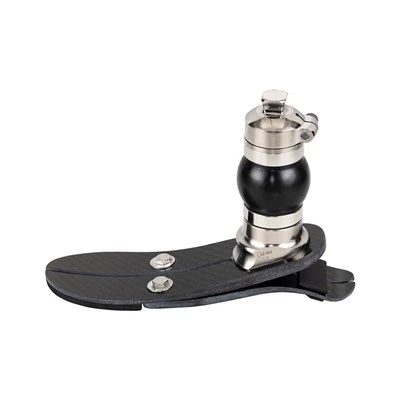


Carbon fiber is the material of choice for energy-storage prosthetic feet, primarily due to its unique mechanical properties. Carbon fiber composites possess an exceptionally high specific strength and specific modulus, allowing them to maintain structural stability under significant loads while exhibiting excellent elastic deformation capabilities.
As a user moves from heel strike to toe-off, the prosthetic foot is subjected to both the user's body weight and the ground reaction force. The carbon fiber laminate structure undergoes bending, converting kinetic energy into stored elastic potential energy. In the later phase of the gait cycle-as the body's center of gravity shifts forward and the load on the foot decreases-this stored energy is rapidly released. This generates an upward, propulsive force at the toe, assisting the user in the push-off phase. This energy-return mechanism significantly reduces the metabolic cost of walking; for users with moderate to high activity levels, it also notably improves both the symmetry and natural quality of their gait.