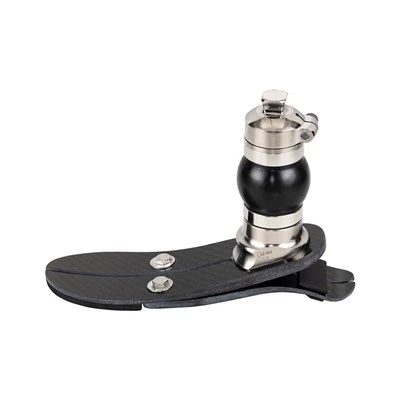


The core principle of a carbon-fiber prosthetic foot is to capture the impact energy generated when the heel strikes the ground during walking-storing it through the elastic deformation of the foot-and then releasing it during the toe-off phase to help propel the user forward.
The CF-E41 carbon-fiber energy-storage prosthetic foot is constructed primarily from carbon-fiber composite materials, which offer a high strength-to-weight ratio and exceptional fatigue life. The product has undergone over 3 million fatigue-resistance cycles, demonstrating that the material maintains a consistent elastic response even after repeated loading. In terms of design, the foot features a split-toe structure, which allows it to adapt more naturally to uneven terrain; on irregular surfaces, this design helps reduce gait instability caused by the concentration of ground reaction forces. The product line covers a size range from 22 cm to 30 cm, with the stiffness tailored to each user's body weight by adjusting the thickness and orientation of the internal carbon-fiber layers.
Notably, this prosthetic foot is rated at the K3 activity level-a mid-to-high activity classification-indicating that it is designed for users who are capable of independent ambulation and possess a moderate level of physical activity, rather than being limited to short-distance movement within indoor environments.