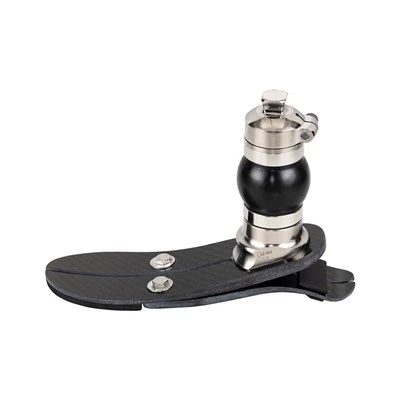


Load-bearing capacity primarily depends on how well the socket fits the residual limb, as well as the mechanical strength of the joint. The socket-the component that comes into direct contact with the residual limb-must distribute body weight evenly. According to publicly available information in the rehabilitation assistive device industry, the load for a transfemoral (above-knee) prosthesis is primarily borne by the ischial support area, while a transtibial (below-knee) prosthesis relies on the patellar ligament for weight-bearing.
Mechanical joints: These feature a simple load-bearing structure and are suitable for users with higher body weight and moderate activity levels; however, they may lead to fatigue after prolonged walking.
Hydraulic joints: These provide more uniform load distribution, reducing localized pressure points on the residual limb, and are well-suited for users who prioritize a high level of comfort.
Intelligent (microprocessor-controlled) joints: These utilize sensors to adjust damping, resulting in smoother load-bearing responses and superior stability, particularly when navigating uneven terrain.