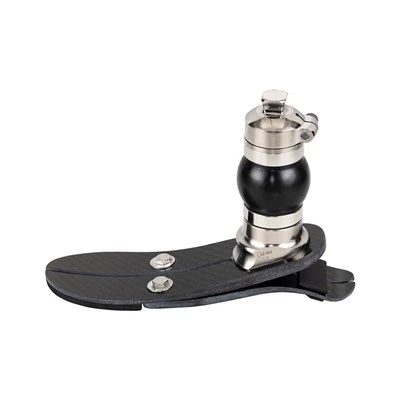


In the industry, the performance of carbon-fiber energy-storage prosthetic feet is typically evaluated based on several key parameters: energy-storage efficiency, shock absorption, and durability. Energy-storage efficiency is determined by the layup orientation of the carbon fibers, the toughness of the resin matrix, and the geometric design of the prosthetic foot. For instance, a split-toe design allows the foot to better adapt to uneven terrain while increasing the degree of freedom for torsional deformation, thereby enhancing the smoothness of energy absorption and release.
Shock absorption relates to the prosthetic foot's elastic response in the vertical direction; a design with high shock-absorption capabilities can cushion ground-impact forces, reducing the impact load transmitted to the residual limb and joints. Regarding durability, while carbon-fiber material itself offers excellent fatigue resistance, the actual service life is influenced by factors such as the user's body weight, activity level, and the quality of daily maintenance.
Within the industry, energy-storage prosthetic feet are generally categorized according to activity levels. The "K3" classification, for example, corresponds to users with moderate-to-high activity levels-individuals capable of navigating diverse terrains and engaging in various physical activities-who consequently have higher requirements for the energy-storage performance and stability of their prosthetic feet.